NQ Term Structure
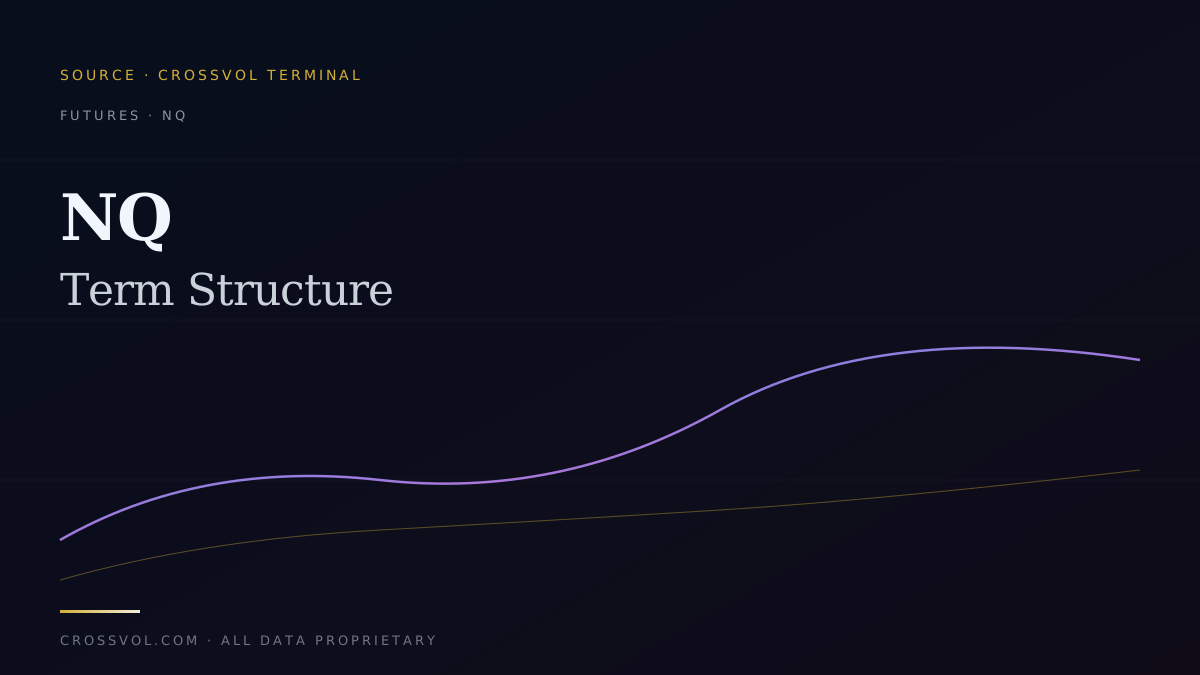
Source: CrossVol Terminal · 2026-07-08 12:00 UTC
How to read this view
The term structure of NQ implied volatility offers a critical perspective for traders assessing future market expectations for the Nasdaq 100 futures. Essentially, it’s a curve that plots implied volatility across a spectrum of expiration dates, ranging from immediate weekly options to longer-dated quarterly contracts. For NQ, you often observe an upward-sloping term structure, known as contango. This shape indicates the market anticipates greater potential for price movements further out in time, a common characteristic reflecting the growth-oriented nature and event sensitivity of tech-heavy indices. Conversely, if shorter-dated options exhibit higher implied volatility than longer-dated ones, creating a downward-sloping curve (backwardation), it signals immediate market stress or heightened near-term uncertainty. A vol-focused trader meticulously monitors the evolving shape of this curve. A steepening of the curve might suggest increasing long-term apprehension, while a flattening could imply a more balanced outlook or the dissipation of a specific event risk. Anomalies, such as a localized spike in implied volatility for a particular expiry, often highlight upcoming catalysts. Interpreting these shifts provides valuable context for understanding the market's collective assessment of NQ's future volatility landscape. Full live view on CrossVol Terminal.
Frequently asked questions
What is NQ volatility term structure?
Term structure is the curve of implied volatility across NQ option expiries — from front-month to long-dated. Contango (upward slope) signals near-term calm; backwardation (downward slope) signals near-term stress. CrossVol Terminal plots the live NQ curve.
How does NQ term structure forecast volatility?
Backwardation on NQ often precedes elevated realized volatility in the front weeks; aggressive contango signals expected calm. The slope and curvature carry information about event risk, earnings, macro catalysts. CrossVol Terminal highlights NQ curve regime shifts.
When does NQ term structure invert?
Inversion happens when front-month implied vol exceeds longer-dated, typically driven by an imminent event or a stress spike. CrossVol Terminal marks NQ inversion regimes historically so traders can study analog conditions.
Related views
Term Structure on other markets
Follow CrossVol Terminal
Daily snapshots, market notes and intraday alerts across asset classes.